
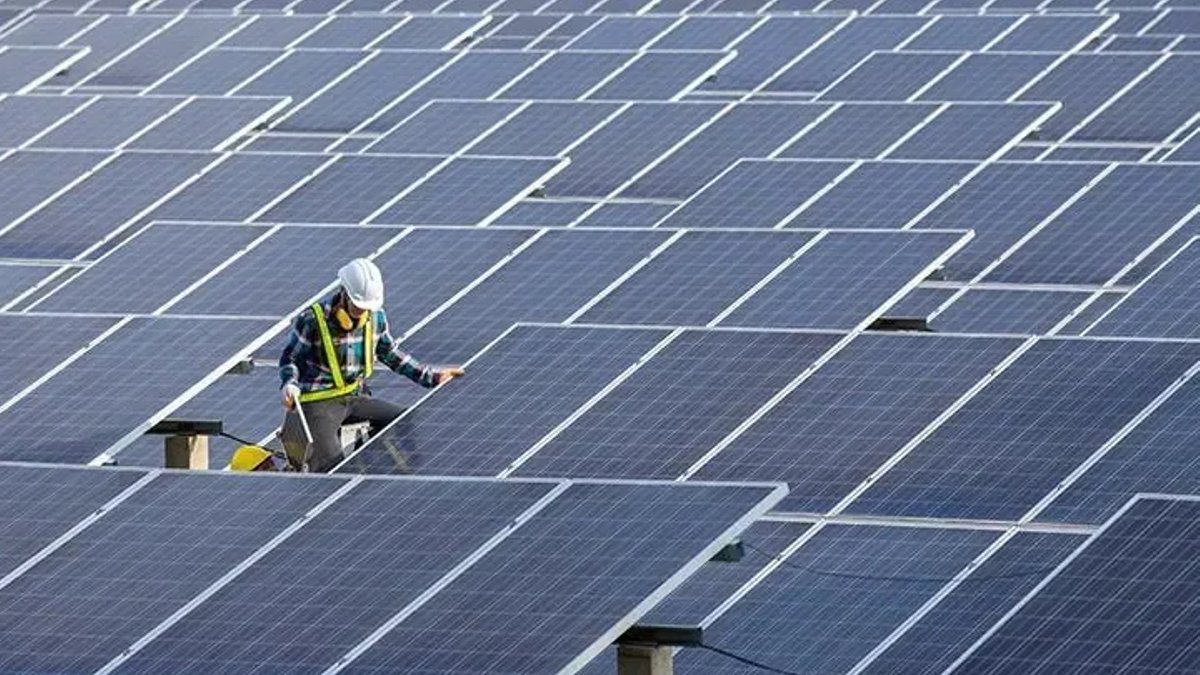
Kuwait has officially advanced the procurement process for the 500-megawatt (MW) Al Dibdibah Power and Al Shagaya Renewable Energy Phase III – Zone 2 project. The Kuwait Authority for Partnership Projects (KAPP) announced this significant development via a report published by the local daily Al-Rai. The project is strategically situated within the expansive Shagaya Renewable Energy Park (SREP), a designated site located in the Jahra Governorate. The official opening of technical bids marks a critical transition from the preliminary planning phases into the active competitive evaluation stage for the solar facility.
The report detailed that the current phase involves the submission of technical proposals by two distinct consortia. These documents have been formally submitted to the Higher Committee for PPP Projects, which is tasked with the responsibility of reviewing the technical feasibility and project specifications of the bids. Following this evaluation, the committee is expected to proceed to the financial bidding stage, where pricing structures will be scrutinized. However, the report clarifies that no specific identities for the submitting consortia have been disclosed to the public, nor has a definitive timeline for the opening of financial bids been announced.
Competition heats up for solar project
This competitive stage follows a stringent prequalification process conducted in October 2025. The prequalification was a collaborative initiative undertaken by the Kuwait Authority for Partnership Projects (KAPP), the Ministry of Electricity, Water and Renewable Energy, and the Kuwait Institute for Scientific Research (KISR). Through this rigorous assessment, nine entities were prequalified to compete for the contract. The selection of these entities, which include a mix of international power developers and local firms, indicates the project’s high level of strategic importance and the effort to ensure high standards of execution.
Related: GCC firms seal $18bn deals amid regional strains
The list of prequalified entrants is diverse, featuring various international energy leaders collaborating with local Kuwaiti partners to meet the project’s demands. The first consortium is led by Saudi Arabia’s ACWA Power, in partnership with Kuwait’s AEPC Energy. Another major entry is the consortium led by France’s EDF Renewables, which combines forces with Kuwait’s Abdullah Al Hamad Al Sagar & Brothers and South Korea’s Korean Western Power. Additionally, China’s Jinko Power HK is competing alongside Kuwait’s Combined Group Contracting Company (CGC). The project also attracts players from the UAE, with Masdar leading a consortium that includes Kuwait’s Fouad Alghanim & Sons General Trading & Contracting Company.
The roster further expands to include the US-based Swift Current Energy (SCE), working with Kuwait’s Arizona National for General Trading & Contracting Company. Established global energy players such as France’s TotalEnergies Renewables are also in the running, along with Turkish firms Limak Yatirim Enerji Uretim Isletme Hizmetleri ve Insaat and Kalyon Enerji Yatirimlari. The final prequalified entity is the consortium led by China’s Tianjin Zhonghuan New Energy, which joins forces with Sinotec and Kuwait’s Mohammed Abdulmohsin Al-Kharafi & Sons. The presence of this extensive international roster suggests that the project aims to set a high technical standard to meet the modernization goals of the Gulf energy grids. By inviting such a broad spectrum of expertise, the organizers hope to drive innovation and efficiency in the final infrastructure.
Long-term agreement secured
Once the technical evaluations are complete and a preferred bidder is selected, the project will be anchored by a 30-year Power Purchase Agreement (PPA). This commercial agreement will be executed with the Ministry of Electricity, Water and Renewable Energy, which serves as the off-taker for the facility. The 30-year duration of the PPA is designed to provide a stable and guaranteed market for the generated electricity for three decades. This long-term commitment is key for securing the financial viability of the project and ensuring a reliable supply of renewable power to the national grid.


Leave a Reply