
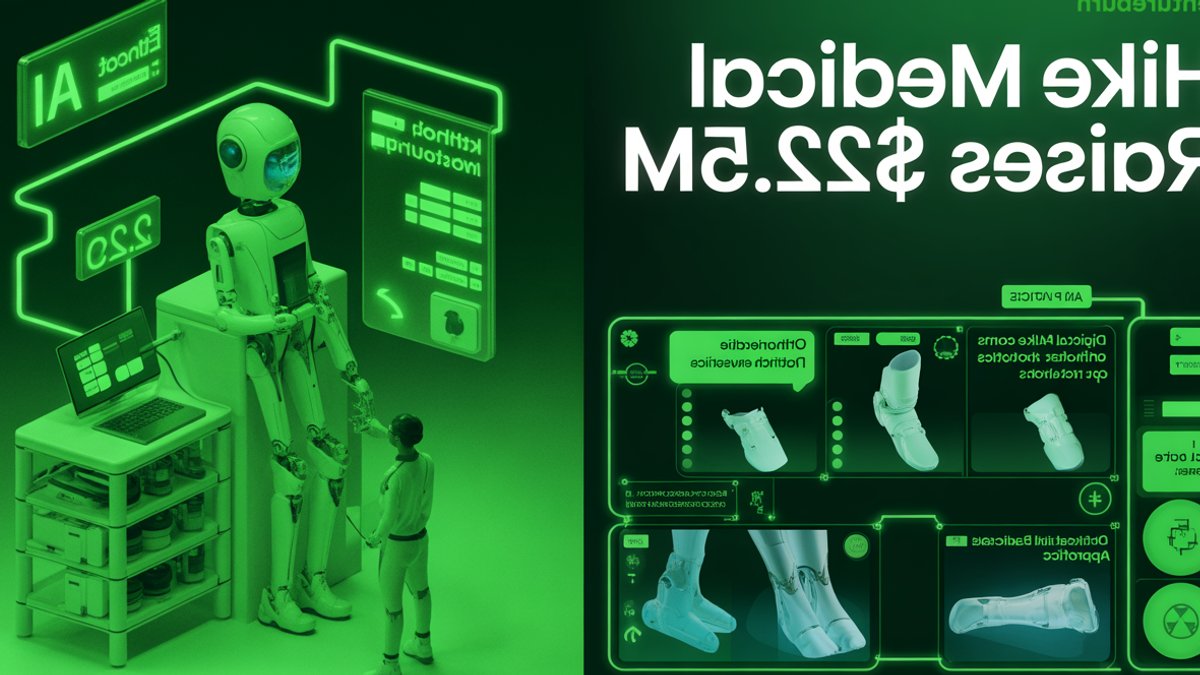
Hike Medical has secured $22.5 million in combined seed and Series A funding to modernize the delivery of medical devices. The San Francisco-based company focuses on streamlining the supply chain for orthotics, prosthetics, and durable medical equipment. Saga Ventures led the round, with participation from Indicator Ventures, Fifth Down Capital, RiverPark Ventures, and Orthofeet.
Improving Clinical Workflow Efficiency
The firm aims to address long-standing inefficiencies that often delay patient access to essential equipment. Founder and CEO Aadi Bhanti, whose family has operated in the orthotics and prosthetics sector for three generations, noted that outdated paperwork and complex payer requirements contribute to significant waste. The company estimates that tens of millions of people in the United States utilize these devices annually, yet administrative hurdles frequently impede the process.
Initial efforts centered on custom insole production, utilizing mobile scanning technology and 3D printing. This approach reportedly reduced manufacturing times from several weeks to just a few days. The firm also stated that its remake rates dropped from one in 15 to one in 400. By integrating these digital tools into clinical settings, the organization intends to move away from traditional foam impressions and manual documentation methods.
Related: AI robotics startup secures $200 million funding
Scaling Operations and Infrastructure
The current strategy involves expanding the Hike Intelligence platform to manage a broader range of clinical workflows. By deploying artificial intelligence agents to automate referrals and secure insurance approvals before patient visits, the software seeks to reduce the administrative burden on medical providers. These automated systems are intended to connect back-office operations directly with clinical demand.
Looking ahead, the company’s ability to maintain these accelerated production timelines as it expands into new device categories will likely determine its long-term viability in a fragmented market. If the firm successfully scales its digital infrastructure without compromising the precision required for custom medical hardware, it may force established competitors to rethink their reliance on legacy manufacturing and manual verification processes. The success of this model depends on the ability to replicate the efficiency currently seen in its Peoria, Illinois, facility across a much wider array of products.
To support this growth, the company plans to hire additional engineering and sales staff in San Francisco and Peoria. The organization recently appointed Jerry Tang, formerly of Flexport and Dandy, as its chief operating officer to help manage these scaling efforts. Max Altman of Saga Ventures stated that the investment was driven by the firm’s focus on addressing broken infrastructure within the healthcare sector directly. The company operates what it describes as the largest orthotic 3D print farm in the country, maintaining a turnaround time of approximately five business days for custom orders. Prior to this digital overhaul, a single insole could take weeks to produce; now the process is streamlined from scan to shipment. The funding will also accelerate the development of new software modules that handle billing and patient communication automatically. Bhanti emphasized that the goal is to give clinicians more time with patients rather than paperwork. This operational shift has already attracted interest from larger healthcare networks seeking similar efficiencies. The team remains focused on proving that speed and precision can coexist in custom medical manufacturing. With this capital injection, the company intends to double its production capacity over the next year. Its facility in Peoria currently operates around the clock to meet demand. The new hires will focus on refining the AI models that predict insurance requirements. Each device still undergoes a final human inspection before shipping, ensuring quality control remains intact. The company’s growth trajectory suggests that the market is ready for a more automated approach to medical device delivery. By keeping production in-house, they retain control over both quality and turnaround times. The next phase will test whether this model can be applied to more complex devices like powered prosthetics. Early experiments in that area have shown promising results, according to the company. The leadership team believes that the same principles of digital workflow and rapid fabrication can apply across the entire sector. As the platform matures, it will likely become a template for other medical supply chains facing similar pressures. The company is also exploring partnerships with academic medical centers to refine its clinical integrations. These collaborations could provide valuable data on patient outcomes and device performance. The immediate priority, however, remains scaling the existing operations without sacrificing the speed that has defined its early success. Every new hire is trained on the company’s core philosophy of reducing friction in the patient journey. The founders have structured the business to be lean, with a flat hierarchy that encourages rapid decision-making. This agility has allowed them to pivot quickly when payer requirements change. The funding round closed in under two months, reflecting strong investor confidence. The company’s next milestone is to reach profitability within the next two fiscal quarters. If achieved, it will validate the model without relying on further external capital. The team remains cautious about overexpansion, preferring to grow only as fast as its quality metrics allow. Each new product line is tested extensively before being offered to clinics. The company’s internal data shows that patient satisfaction scores have risen alongside the faster turnaround times. This feedback loop helps refine both the software and the manufacturing process. The focus now shifts to executing on the roadmap laid out in the funding proposal. The founders have a clear vision for the next five years, and they intend to stick to it. The market for orthotic and prosthetic devices is large enough to support multiple players, but the company aims to lead through innovation. By staying ahead of the curve, they hope to set the standard for what modern medical device delivery looks like. The coming months will reveal whether the scale-up can match the promise of the pilot programs. For now, the team is energized by the momentum and committed to the mission. The company’s journey from a small insole operation to a national player has been marked by careful planning and steady execution. That trajectory shows no signs of slowing down.


Leave a Reply