
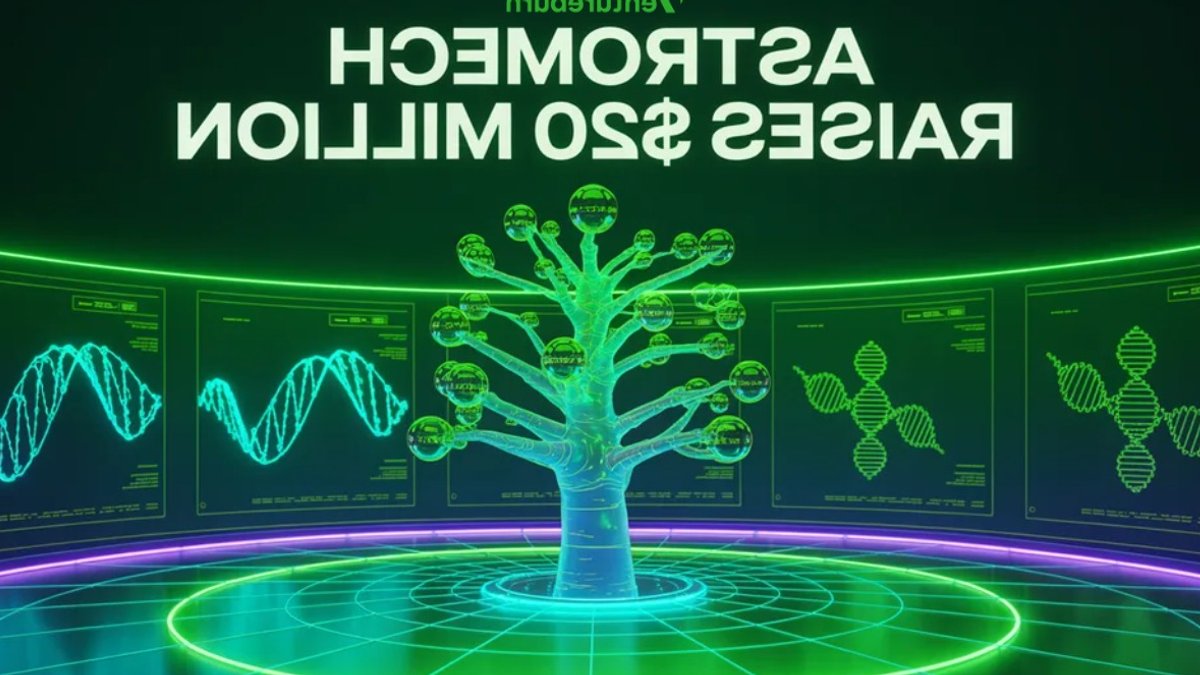
Astromech’s vision rests on a paradigm shift that treats biology the way meteorology treats the atmosphere: by fusing real‑time observations with deep historical patterns to anticipate future states. By feeding current genomic snapshots into models that have been trained on the entire evolutionary record, the platform can simulate how organisms might respond to emerging stressors, much as a weather map predicts a storm’s path before it arrives. This “evolutionary forecasting” approach seeks to move the scientific community from a posture of reaction to one of anticipation, allowing researchers to intervene before a crisis unfolds.
The backbone of Astromech’s capability is an expansive, multi‑species data ecosystem. Leveraging the extensive genome bank assembled by its sister venture, which houses DNA from both extinct and extant organisms, the company has access to functional information that spans a breadth of life far beyond traditional model organisms. This diversity is key because the regulatory elements that switch genes on and off—those non‑coding regions that dictate when and where proteins are produced—vary dramatically across lineages and hold the key to complex traits.
In practice, the AI engine ingests not only raw sequences but also layers of functional annotation, expression profiles, and phenotypic outcomes gathered from a multitude of species. By aligning these data points along a calibrated evolutionary timeline, the system can trace the emergence, modification, or loss of specific genetic pathways. Such a longitudinal view enables scientists to pinpoint when a particular adaptation, such as enhanced DNA repair mechanisms, first appeared and how it has been fine‑tuned over millennia.
One of the early demonstrations of this methodology involved constructing a full map of longevity‑related genes across the tree of life. Rather than isolating a single gene in a solitary organism, the analysis revealed patterns of cancer resistance, cellular maintenance, and aging that have been conserved, altered, or discarded in different branches. This panoramic perspective opens avenues for identifying genetic configurations that confer resilience, offering a template for engineering more robust biological systems.
Related: Rillet valued at 1 billion in funding
The company’s founders bring complementary expertise to the venture. The partnership between a seasoned entrepreneur and a pioneering geneticist blends practical scaling experience with deep scientific insight, supporting an environment where ambitious engineering goals are matched by rigorous data‑driven validation. Their prior collaboration on resurrecting ancient species demonstrated a capacity to translate cutting‑edge genome editing into tangible outcomes, setting a precedent for the predictive ambitions of Astromech.
Funding from a coalition of venture partners has propelled the organization into a phase where the platform can transition from laboratory proof‑of‑concept to real‑world pilots. The infusion of capital is earmarked for expanding the talent pool, augmenting computational infrastructure, and enriching the proprietary datasets that fuel model training. By bolstering these foundational elements, the team aims to launch joint projects with entities focused on health security and ecological stewardship.
Planned collaborations will put the forecasting engine to the test against pressing challenges such as genetic bottlenecks that threaten biodiversity, rapid environmental shifts that alter species distributions, the evolutionary trends of emerging pathogens, and the progression trajectories of complex diseases. Demonstrating predictive accuracy in these domains could reshape preventive strategies, allowing interventions to be deployed before detrimental outcomes become entrenched.
Beyond its immediate scientific agenda, Astromech’s work shows a broader transformation in how humanity engages with living systems. By converting the historical record encoded in DNA into a forward‑looking tool, the initiative promises to turn the vast, often opaque archive of evolution into a navigable roadmap. This capability could ultimately empower policymakers, clinicians, and conservationists to make decisions grounded in a subtle understanding of how life adapts, thereby steering the future of biology with the same confidence that forecasters bring to the weather.


Leave a Reply